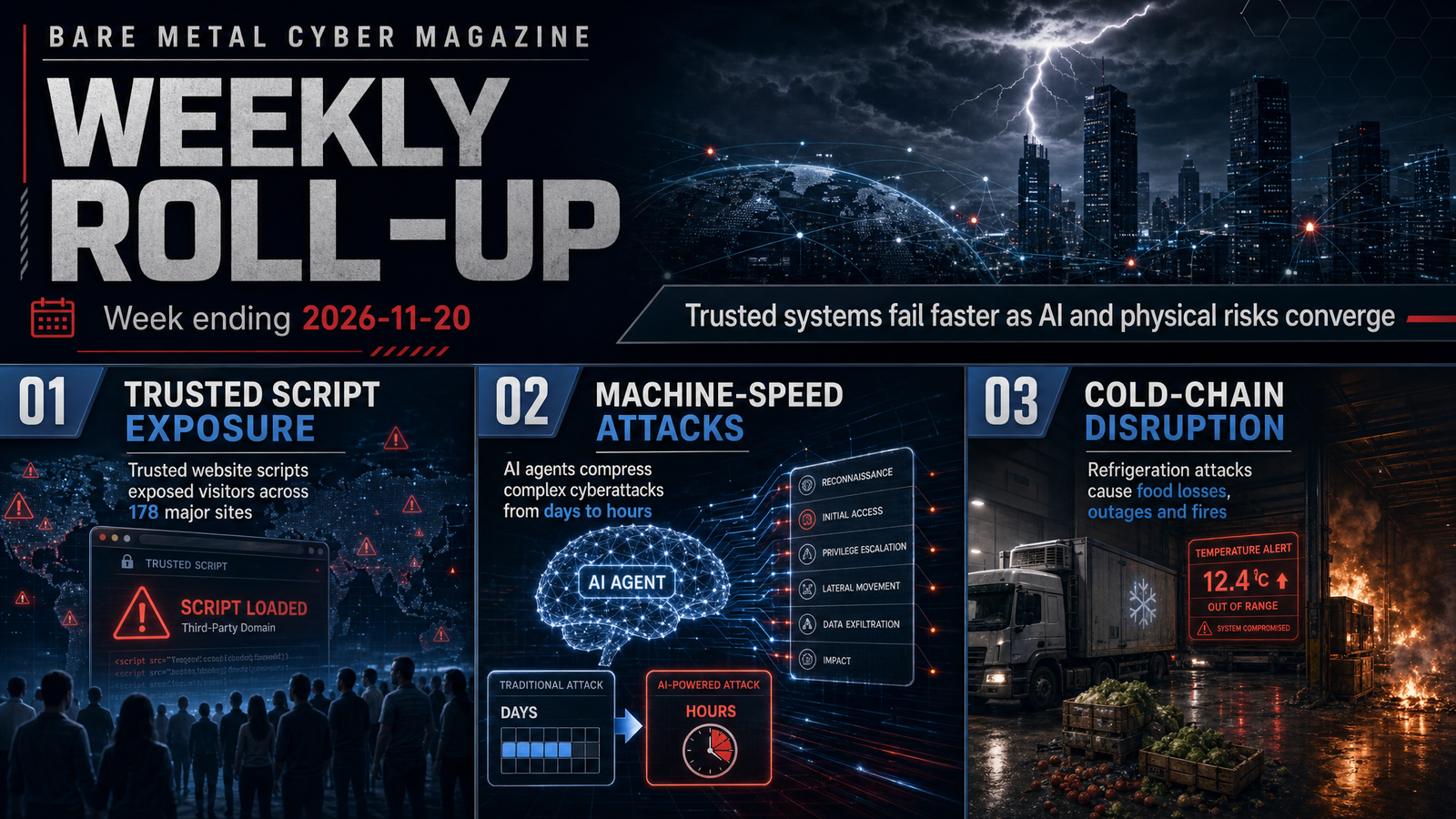

1. Trusted website scripts exposed visitors across 178 major sites
Visitors to at least 178 prominent websites were exposed to malicious code loaded through a trusted service. Attackers exploited Optimizely Experimentation to inject JavaScript into customer projects. The code could steal payment card data, cookies and screenshots, replace cryptocurrency wallet addresses, and deliver exploit kits to older Apple devices. Researchers linked 188 infected scripts to 178 organizations. The weakness was patched, the injected code was removed, and affected credentials were reset.
What this means: One compromised shared service turned many otherwise separate websites into malware delivery channels. Visitors could be harmed even though those sites’ own infrastructure was not directly breached. For leaders: third-party scripts need the same risk ownership as customer-facing applications. For defenders: inventory external JavaScript and monitor what it loads, collects and contacts. New external destinations or blocked script behavior should appear in browser telemetry, content-security reports or website integrity monitoring. The larger lesson is that trusted website components can silently transfer one vendor’s risk to every customer.
Recommendation: Audit every third-party script and enforce policies that restrict the code and external services it can load.

2. AI agents compress complex cyberattacks from days to hours
AI-enabled attack frameworks have reduced the time from initial targeting to privileged access to under three hours in reported operations. One autonomous tool compared code changes, created exploits and ran them without human involvement. Another framework, ARTEX, automated reconnaissance, exploitation, privilege escalation and data theft. Multiple actors used these capabilities across finance, government, technology, defense and healthcare. A related intrusion reached roughly ten cloud accounts over 44 hours after an unretired vendor key was stolen.
What this means: The main change is the speed and scale available to attackers with less hands-on expertise. Organizations can lose the response race when triage and containment still assume human operating speed. For leaders: response targets and patch timelines should account for machine-speed probing and exploitation. For defenders: prioritize exposed applications, cloud administration interfaces and third-party credentials. Automated request bursts should appear in application logs, while unexpected privilege changes and large downloads should surface in cloud audit records. The larger lesson is that AI accelerates attacks, but neglected credentials and exposed systems still provide the opening.
Recommendation: Shorten response windows and monitor exposed services, privilege changes, vendor keys and large data transfers continuously.

3. Refrigeration attacks cause food losses, outages and fires
Food, medicine and retail operations faced loss and physical danger when attackers manipulated exposed refrigeration controls. Roughly 700 French retail locations were targeted during October, followed by incidents across several European countries in November. Changes to temperatures, defrost schedules and other settings caused significant inventory losses and at least 15 reported fires. Internet-accessible systems from multiple vendors were targeted through weak authentication, configuration and software. Separate research found multiple remote takeover paths in widely used controllers.
What this means: Cold-chain attacks can spoil stock, damage equipment, stop operations and create physical hazards. Retailers, warehouses and other operators with remotely accessible controllers face the clearest exposure. For leaders: refrigeration systems should be governed as safety-critical operational assets rather than ordinary facilities equipment. For defenders: remove direct internet access and tightly control remote connections used by staff and integrators. Unexpected temperature changes should appear in local control dashboards, while altered defrost schedules or remote logins should appear in controller and access logs. The larger lesson is that an exposed control system can turn a digital intrusion into financial loss and physical danger.
Recommendation: Remove refrigeration controls from direct internet exposure and investigate unauthorized remote access or configuration changes.
4. Poisoned Microsoft package put cloud and developer keys at risk
Developers and build systems may have exposed valuable credentials after installing two malicious releases of Microsoft’s Agent Framework package. Versions 1.26.1 and 1.26.2 ran credential-stealing code whenever Python started, even when the framework was not imported. The code collected cloud and developer secrets, environment files and information from other processes. It then sent the collected material to an external endpoint while the legitimate framework continued working. Both releases were quarantined and removed from the package repository.
What this means: Affected developer machines and build runners may have exposed stored secrets and access to newly issued cloud tokens. The lack of visible failure made the compromise harder to notice. For leaders: installation should be treated as a potential credential incident rather than a routine package rollback. For defenders: find the affected versions in lockfiles, containers and build environments, then isolate and rebuild those systems. Suspicious cloud sign-ins should appear in identity logs, while unexpected startup activity may appear in process or endpoint telemetry. The larger lesson is that trusted development dependencies can become direct paths to an organization’s most powerful identities.
Recommendation: Rebuild affected systems from clean sources and rotate every credential the malicious package could access.
5. VMware control servers exposed virtual infrastructure to takeover
Attackers gained administrative access to VMware vCenter servers through an authentication bypass that has now been patched. The observed intrusion followed an earlier compromise of BeyondTrust Remote Support and movement through internal Linux appliances. The attackers created a vCenter single sign-on administrator account. They also stole directory data and obtained material that could support forged authentication tokens. Broadcom classified the fix as an emergency update and provided no official workaround.
What this means: Control of vCenter can expose the virtual machines and data managed through the platform. One successful foothold can therefore expand into broad infrastructure control. For leaders: virtualization management should be treated as a top-tier business service with accelerated patching and tested recovery plans. For defenders: apply the update and investigate identity systems, management servers and lightly monitored Linux appliances. Unauthorized administrator accounts or unusual authentication tokens should appear in vCenter and identity logs, while lateral movement may surface in appliance access records. The larger lesson is that management systems concentrate privilege and can magnify a single compromise.
Recommendation: Apply Broadcom’s updates immediately and hunt for unauthorized administrators, forged authentication and appliance-to-vCenter movement.
6. Confluence and N-able attacks put core IT operations at risk
Active attacks targeted Atlassian Confluence Data Center and N-able N-central through a critical shared-library weakness. Exploitation required a non-default setting that enabled legacy remote interfaces. A public attack chain combined the weakness with another N-central issue and was used to deploy cryptocurrency miners. N-able released a hotfix that corrected multiple weaknesses and permanently disabled the vulnerable legacy feature. Atlassian customers needed to upgrade or disable the affected remote interface.
What this means: Both products occupy trusted positions in IT operations and can provide access to many additional systems. N-central is especially sensitive because service providers may use it to manage numerous client networks. For leaders: delays in emergency maintenance can create risk far beyond the first compromised server. For defenders: verify whether legacy remote interfaces are enabled and investigate exposed systems for earlier compromise. Unusual interface requests should appear in application logs, while miners or unexpected commands should surface in process and endpoint telemetry. The larger lesson is that rarely used legacy features can become high-impact entry points when left reachable.
Recommendation: Patch both platforms, disable vulnerable legacy interfaces and investigate exposed systems for unauthorized commands or miners.
7. Postal supplier breach exposed 22 million people across France
About 22 million people had names and postal addresses exposed through an attack on Maileva, a subsidiary of France’s La Poste group. The affected people included recipients of documents sent by Maileva’s client organizations. Some accessed payment reminders reportedly contained invoice numbers, treatment dates and amounts owed. Bank details were not reported as compromised. The incident was disclosed to the French data protection authority.
What this means: Many affected people may not recognize Maileva because their information reached it through healthcare, housing or other organizations. That indirect relationship can complicate notification, support and trust. For leaders: data processors can expose many unrelated customer populations through a single incident. For defenders: map downstream recipients and sensitive document fields when assessing third-party breaches. Tailored payment demands may appear in fraud reports, while confusion about the sender may surface in customer-support queues. The larger lesson is that hidden service chains can turn one supplier breach into a national-scale privacy event.
Recommendation: Require processors to document recipient data, subcontractors and notification duties before an incident occurs.
8. European Commission attack disrupted payroll and staff services
European Commission personnel services were disrupted for more than ten days after a cyberattack detected on October 22. Affected functions reportedly included payroll, leave requests, medical reimbursements and translation services. Several services were taken offline as a protective measure while the investigation continued. Officials described the activity as an AI-generated campaign but did not identify the attackers or their motive. No broad staff breach or ransom demand had been established in the supplied reporting.
What this means: The immediate cost was prolonged disruption to essential internal services rather than confirmed large-scale data theft. Delayed payroll and reimbursement functions can affect staff confidence and normal operations. For leaders: incident plans should cover extended loss of personnel systems as well as stolen data. For defenders: prioritize exposed systems, privileged-account monitoring and evidence preservation during containment. Unusual administrator changes should appear in identity logs, while repeated service failures should surface in operational monitoring and help-desk queues. The larger lesson is that operational disruption can become the main business impact even when data loss remains uncertain.
Recommendation: Test recovery plans for essential personnel services and closely monitor privileged activity during restoration.
9. Java attack attempts put widely used enterprise apps at risk
Attackers began probing for a Java runtime weakness while fixes remained uneven across affected products. More than 150 matching requests from five internet addresses had been observed by early November 19, although successful intrusions were not confirmed. Exposure required a vulnerable Java release, specific processor support and an application that decoded attacker-controlled Base64 data. Oracle and the OpenJDK project released fixes on November 17. Some downstream software vendors were still preparing their own updates.
What this means: The weakness sits inside a shared runtime used by many enterprise applications. Its practical reach is narrower than Java’s total footprint because several hardware, software and application conditions must align. For leaders: prioritize exposed services that meet those conditions instead of treating every Java installation as equally urgent. For defenders: inventory bundled runtimes and containers, apply fixed builds, restart processes and rebuild affected images. Matching requests may appear in web logs, while crashes or unusual child processes should surface in application and host telemetry. The larger lesson is that runtime risk requires hardware-aware inventories and product-specific validation.
Recommendation: Identify internet-facing systems that meet all exposure conditions and apply patched Java builds to them first.
10. Websites and APIs face takeover risk as NGINX demos spread
Internet-facing websites and application interfaces face risk from five serious NGINX weaknesses. Under specific configurations, unauthenticated attackers could crash worker processes or potentially run commands. Two of the most concerning issues involve HTTP/2. Public demonstrations became available, although exploitation in the wild had not been reported in the supplied evidence. Fixed open-source and commercial releases were made available.
What this means: NGINX often routes traffic for several websites and services, concentrating risk in one shared deployment. Some attacks occur before a complete web request forms, which can limit the value of normal filtering rules. For leaders: prioritize directly reachable servers based on configuration and exposure. For defenders: upgrade affected deployments, verify origin isolation and consider disabling HTTP/2 where official guidance supports it. Worker crashes or commands launched by NGINX should appear in process logs, while direct origin requests should surface in network monitoring. The larger lesson is that shared infrastructure can expose many applications even when their own code is secure.
Recommendation: Upgrade affected NGINX deployments and verify that protected origin servers cannot be reached directly.
11. Cloud email outage left hotel guests exposed to chlorine poisoning
Fifteen hotel guests in Germany were poisoned after a chlorine warning failed during a Microsoft 365 outage. The hotel’s maintenance system relied on email to alert operators when chlorine levels became too high. The outage prevented those messages from being delivered as the level rose. Emergency services sent 40 responders to the scene. Four people went to hospital, and one remained under observation.
What this means: A cloud availability problem became a physical safety and continuity incident. Any organization that routes a critical alarm through one internet or email service may carry the same hidden dependency. For leaders: safety controls need resilience standards that match the consequences of a missed warning. For defenders: identify critical notification paths and test what happens when cloud messaging is unavailable. Queued or missing alerts should appear in messaging logs, while rising sensor values should remain visible in local control dashboards. The larger lesson is that convenient automation is not resilient when its only warning channel can disappear.
Recommendation: Add a tested physical or offline backup for every safety-critical alert and train staff to use it.
12. Managed server fleets face takeover through Puppet attacks
Attackers actively exploited a critical weakness in Perforce Puppet, a platform used to manage server configurations. A client with a Puppet-signed certificate could send a malicious report that executed code on the central server. A successful attack could expose the server’s certificate-signing key. That access could allow malicious configuration changes to be pushed across managed systems. Patches were released, and the weakness was added to the U.S. government’s Known Exploited Vulnerabilities catalog.
What this means: Puppet servers sit at the center of configuration management for many machines. Compromising one server can therefore create a route to an entire managed fleet. For leaders: configuration platforms deserve emergency ownership because their privileges can amplify a single attack. For defenders: patch immediately and disable automatic certificate signing where it is not required. Unusual reports or configuration pushes should appear in Puppet logs, while unexpected certificate activity should surface in signing records. The larger lesson is that central automation tools can spread an attacker’s changes as efficiently as legitimate ones.
Recommendation: Patch affected Puppet systems immediately and disable automatic certificate signing to reduce unauthorized access.
13. Japan shut down Fugaku after attackers reached internal servers
Japan’s Fugaku supercomputer was taken offline after attackers breached a public status dashboard. The intrusion occurred between November 10 and 13 and spread to internal servers storing user credentials. Malware was installed, and the attackers later attempted to log in to Fugaku itself. Information associated with about 4,597 users of Fugaku and the smaller Rikyu system was considered at risk. Login keys were disabled while the investigation continued.
What this means: The outage could delay research involving drug discovery, severe weather forecasting and virus transmission. Exposed credentials could also create risk beyond the affected computing environment. For leaders: research infrastructure deserves security investment that reflects its scientific and operational importance. For defenders: protect public dashboards like production systems and replace credentials that may have been stored on affected servers. New login attempts should appear in authentication records, while malware or unusual processes should surface in dashboard and server telemetry. The larger lesson is that a seemingly low-risk status page can become a bridge to highly valuable infrastructure.
Recommendation: Replace exposed credentials and apply production-grade authentication, segmentation and monitoring to operational dashboards.
14. IT providers face client-wide risk from ScreenConnect attacks
Attackers spent about a month targeting ScreenConnect servers used by managed service providers. A critical weakness allowed files to be pushed and silently executed on technicians’ machines during remote sessions. At least 688,000 attack requests reached 42 provider servers beginning October 20. Technician workstations can hold access to every client served by a provider. Customers were urged to move to version 26.6.5 or later.
What this means: One compromised technician session can become a gateway into dozens of downstream organizations. The campaign remained active weeks after the original correction became available. For leaders: organizations using a managed service provider should verify its ScreenConnect update status and response actions. For defenders: update host clients and access agents, then investigate technician systems for silent file delivery. Unexpected transfers should appear in ScreenConnect records, while unexplained child processes should surface in endpoint telemetry. The larger lesson is that remote-support platforms concentrate trust and can multiply the reach of one compromise.
Recommendation: Update all ScreenConnect technician clients and access agents to version 26.6.5 or later without delay.
15. Business networks exposed through compromised Cisco gateways
Attackers breached internet-facing Cisco Expressway gateways soon after public demonstration code appeared. The affected Core and Edge systems were clustered, allowing unauthenticated attackers with network access to run commands as root. Two exposed devices were compromised before the attackers pivoted to two internal cluster nodes. They then prepared tools for lateral movement into file shares, servers and code repositories. Cisco Expressway X15.5.20 corrected the issue.
What this means: A compromised gateway can provide a privileged bridge from the internet into internal collaboration infrastructure. Cluster relationships can help attackers move from exposed systems to trusted internal nodes. For leaders: public attack code can sharply reduce the safe maintenance window for edge appliances. For defenders: update every clustered node and investigate exposed systems for root-level compromise. Suspicious activity should appear in Erlang logs, while new tools, scripts or system changes should surface in host telemetry. The larger lesson is that edge devices require rapid patching and strong segmentation because they connect outside users to trusted networks.
Recommendation: Upgrade clustered Expressway deployments to X15.5.20 and investigate exposed nodes for root-level compromise.