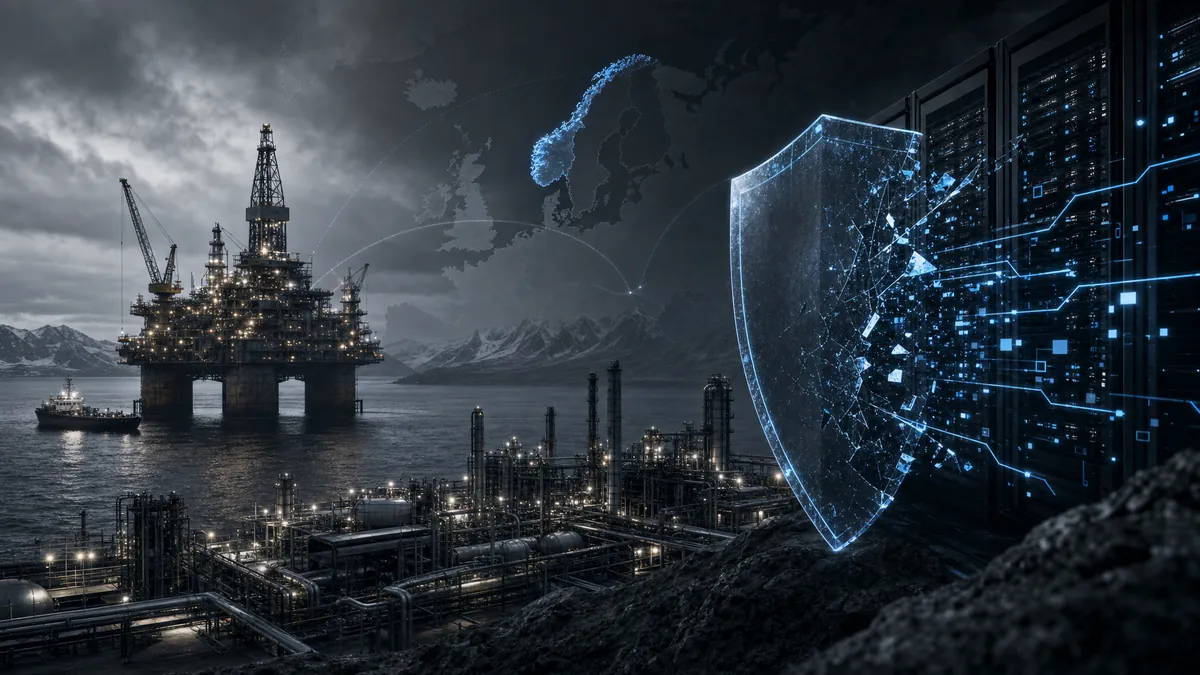
Norwegian energy giant Equinor, one of Europe's largest natural gas suppliers, is working to contain a cyberattack discovered this week that disrupted internal IT services including corporate email. The company says oil and gas production has not been affected and there is no indication data was stolen, but restoring the affected systems could take time. Equinor is working with Norwegian national security authorities to investigate. The attack has not been attributed and the method of access remains undisclosed.
What Happened
Equinor detected a cyberattack on its IT systems on Tuesday, November 17, and confirmed Wednesday that it was still working to contain it. The company, state-controlled and operating in more than 20 countries with around 25,000 employees, said the attack disrupted internal corporate applications and IT services, with reports indicating its internal email system went down. Equinor stated the incident did not involve a virus and therefore carried no risk of further viral spread, and said there was no indication it had affected employees, business partners, or suppliers beyond the internal disruption. Oil and gas production has continued without interruption. The company has not disclosed how attackers gained access or which specific systems were compromised, and it is working alongside Norwegian national security authorities on the investigation.
Why It Matters
Equinor's scale and role in European energy supply make any cyber incident at the company noteworthy even when production is unaffected. For leaders, the case illustrates how a cyberattack confined to IT systems can still disrupt internal operations, employee productivity, and communications for an extended period, since the company itself says restoration timelines are uncertain. For defenders, the contrast between disrupted corporate services and unaffected production is a reason to verify boundaries between corporate IT and operational technology, although Equinor has not explained why production remained unaffected. This event lands amid a broader pattern of escalating cyber risk in Norway, where the national security authority raised the country's risk level this fall after reporting that successful cyberattacks against Norwegian organizations had tripled over six months.
What to Watch
Equinor has not yet named the attackers or disclosed the initial access method, so additional details could emerge as the investigation progresses. It remains to be seen how long restoring full system integrity will take, which the company has acknowledged is still unclear. Given the pattern of recent incidents in Norway, including attacks on Front Systems, Norad, and government digital services, further disclosures about whether this attack shares infrastructure or techniques with those incidents may surface.
What Defenders Should Do
Organizations in critical infrastructure sectors should verify that IT and operational technology networks are properly segmented so that an IT compromise cannot cascade into production systems. Security teams should review incident response plans for extended IT outages, including fallback communication channels if corporate email becomes unavailable. Companies operating in Norway or similar high-risk jurisdictions should coordinate early with national cybersecurity authorities rather than managing incidents in isolation.
The Larger Lesson
This incident fits a broader pattern of escalating attacks against Norwegian organizations and critical infrastructure operators across Europe, reinforcing that energy companies remain high-value targets regardless of whether an attack ultimately reaches production systems. It also highlights a key resilience goal: organizations should be prepared to keep production safe during disruptive IT incidents, while avoiding assumptions about which controls were effective until an investigation provides evidence.