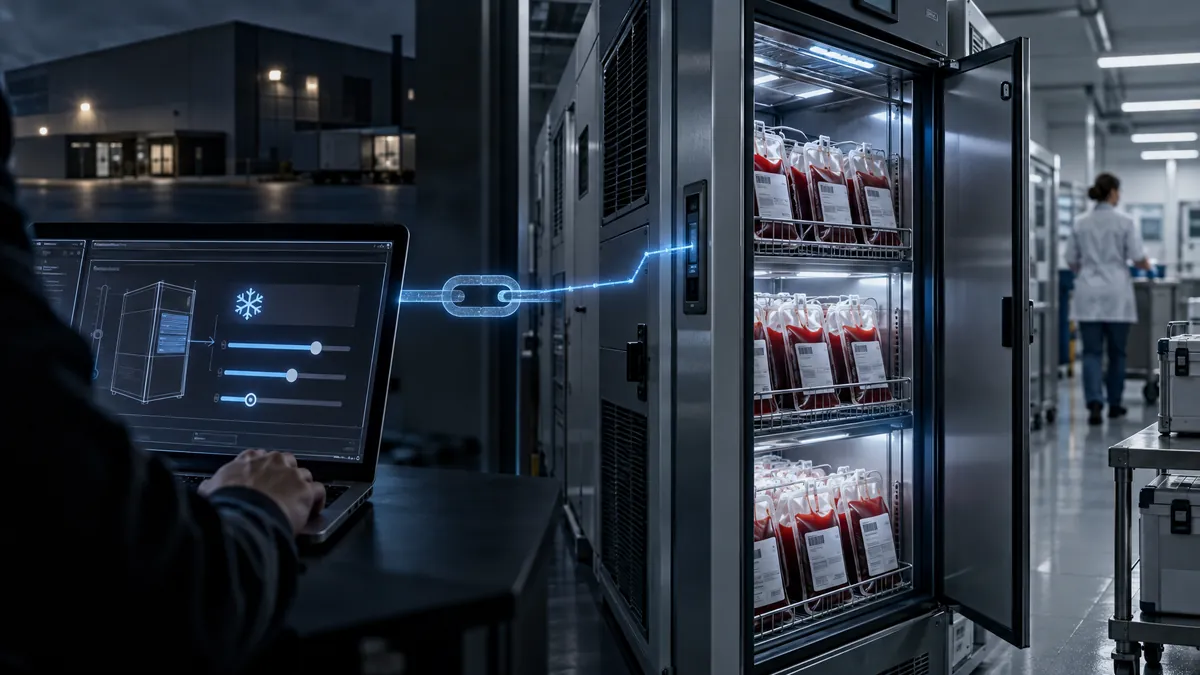
Blood products at three French facilities were put at risk after a cyberattack changed refrigeration temperature and defrost settings. The French national blood service said its refrigeration provider, not the blood service itself, was targeted on November 2. Monitoring alarms let staff reverse the changes or move products. No health impact, product loss or interruption to collection and distribution was reported.
What Happened
A cyberattack against a refrigeration equipment provider changed operating parameters at three facilities belonging to the French Blood Establishment, or EFS. The incident occurred on November 2 and affected systems used to monitor and control cold-storage chambers. EFS said it was not the direct target. Instead, the disruption reached its facilities through technology supplied and remotely managed by an outside provider.
The altered parameters included temperature and defrost thresholds set to extremely high levels. Those changes created an immediate risk to blood products, plasma intended for transfusion, plasma used to manufacture medicines and biological samples held in cold storage. EFS manages collection, processing and distribution across France and supplies about 1,900 healthcare facilities, making refrigeration continuity an important part of healthcare operations.
The safety controls worked. Monitoring and alarm systems detected the abnormal temperature changes quickly enough for staff to correct affected equipment or transfer products to other refrigeration facilities. EFS reported no identified health impact, no loss of blood products and no interruption to blood collection or distribution. Plasma bags were transferred or otherwise secured before they were damaged.
EFS said its technical teams were working with France’s national cybersecurity agency and the Ministry of Health. It also increased monitoring of refrigeration equipment and temperatures. EFS did not name its affected supplier. Separately, Coolworld Rentals said a cybersecurity incident involving remote monitoring software had affected a limited number of its refrigeration units and said the reported vulnerability involved a third-party component outside its direct control.
The incident followed attacks against refrigeration systems at European supermarkets. In October, an estimated 250 to 350 French stores were affected. A later wave reached more than 115 stores across several other European countries. Those incidents included remotely changed temperature settings, activated defrost functions and complete refrigeration shutdowns. The supplied reporting does not confirm who conducted the attacks or whether previously disclosed controller vulnerabilities were used in the EFS incident.
Why It Matters
This was a cyber incident with a potential physical consequence. Blood and plasma depend on controlled temperatures, so an attacker does not need to steal records or encrypt business systems to cause harm. Changing a set point can threaten inventory, disrupt distribution and create pressure on healthcare services. The absence of product loss in this case reflects fast detection and operational response, not an absence of risk.
The route into EFS also matters. A supplier compromise crossed an organizational boundary and affected equipment inside a critical healthcare operation. That pattern complicates risk management because the organization responsible for patient-facing services may not own the software, remote monitoring platform or third-party component that creates the exposure. Contractual responsibility does not remove the operational consequence.
The event also shows why safety systems and cyber controls must support each other. Alarms, temperature monitoring, staff intervention and access to alternate storage prevented the malicious changes from becoming a health emergency. Those controls provided resilience even though the preventive layer had failed somewhere in the supplier chain.
Organizations outside healthcare should pay attention as well. Food storage, pharmaceuticals, laboratories, manufacturing and logistics all depend on remotely managed environmental controls. When those systems are reachable through vendors or aging controllers, a cyberattack can directly affect product quality, safety and service continuity.
What to Watch
The investigation has not publicly established the attacker’s identity, the exact initial access path or the specific component used against the refrigeration provider. It also has not confirmed whether previously disclosed weaknesses in commonly used refrigeration controllers were involved. Those distinctions will matter when affected organizations decide whether software updates alone are sufficient or whether credentials, remote-access architecture and supplier connections also require changes.
Further disclosures could clarify how many customers or units were exposed through the provider and whether the EFS incident was connected to the wider wave of attacks against European supermarkets. Until that relationship is confirmed, organizations should avoid assuming that every incident has the same cause.
The strongest near-term indicators will be additional unexplained temperature changes, unauthorized defrost activity, unusual remote logins and supplier notifications involving monitoring platforms. If more affected sites emerge, organizations using similar equipment may need to accelerate isolation, access reviews and manual monitoring while investigations continue.
What Defenders Should Do
Immediate priority: inventory every refrigeration controller, monitoring platform and remote support connection. Record who owns each system, which supplier can reach it, how that access is authenticated and whether the equipment can be operated safely if remote management is disabled.
Access control: remove factory-default credentials where they remain in use, restrict management interfaces to approved networks and accounts, and limit supplier access to the systems and periods required for support. Where the architecture allows it, separate refrigeration controls from ordinary business and guest networks so a compromise does not create an easy path in either direction.
Detection: alert on temperature or defrost changes outside approved ranges and schedules. Cyber monitoring should not replace independent physical alarms. Teams should compare system commands with actual sensor readings and ensure alerts reach staff who can act at any hour.
Resilience: test the process for transferring blood, medicines, food or other temperature-sensitive products to alternate storage. Confirm that staff can place equipment into a safe local operating mode and maintain manual records if remote monitoring becomes unavailable or untrusted.
Supplier assurance: ask providers how remote access is protected, how third-party components are assessed and how customers will be notified of suspicious activity. Incident exercises should include the possibility that the supplier, rather than the customer, is the original victim. EFS prevented loss because technical detection was connected to a practical operating response; both capabilities need to be tested together.
The Larger Lesson
Cybersecurity is no longer limited to protecting information. Connected control systems translate software commands into temperature, pressure, movement and other physical conditions. A small change in a digital setting can therefore threaten products, safety and essential services.
This incident also challenges the idea that third-party risk can be managed mainly through questionnaires or contracts. When a vendor can reach operational equipment, its security becomes part of the customer’s control environment. Organizations still need their own alarms, segmentation and fallback procedures because they will carry the immediate consequences of a supplier failure.
The durable lesson is resilience through independent layers. Preventive controls may fail, and the exact attack method may remain uncertain during the most urgent phase. Reliable sensors, clear escalation, trained staff and alternate capacity can keep a cyber event from becoming a physical crisis.