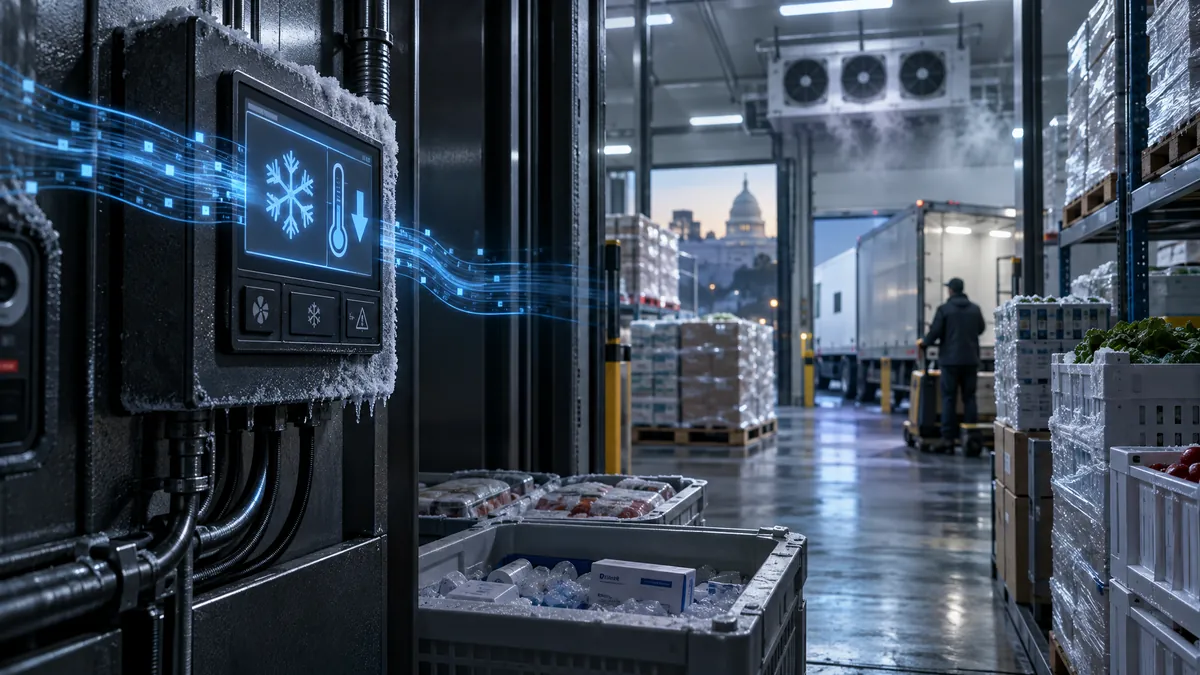
Cold-chain operators face inventory loss and equipment hazards when attackers manipulate connected refrigeration controls. U.S. agencies warned healthcare, food, chemical and transportation organizations after attacks reportedly placed refrigeration systems serving up to 700 French supermarkets into defrost mode overnight. The disruption forced stores to discard spoiled goods, with estimated losses reaching tens of millions of euros. Similar activity was reported against organizations in Belgium, Luxembourg and Sweden.
What Happened
U.S. agencies issued a warning to organizations that depend on industrial refrigeration and cold-chain monitoring after targeted cyberattacks against European refrigeration environments. The warning involved the Cybersecurity and Infrastructure Security Agency, Federal Bureau of Investigation, Department of Health and Human Services, Department of Agriculture and Department of Transportation. It was directed at organizations across healthcare and public health, chemicals, food and agriculture, and transportation because those sectors rely heavily on automated temperature controls and remote monitoring.
The systems in question perform operationally important functions. They can monitor temperatures continuously, record temperature histories, manage defrost cycles and optimize energy use. Those capabilities improve efficiency and help protect sensitive inventory, but remote connectivity also creates an avenue for harmful interference when access is exposed or poorly secured.
The warning followed an attack involving refrigeration controllers used by major supermarket chains in France. The reported activity placed systems serving up to 700 supermarkets into defrost mode overnight, causing refrigerators to overheat. Stores had to discard large quantities of spoiled goods, and estimated losses reached tens of millions of euros. Similar attacks were subsequently reported in Belgium, Luxembourg and Sweden. The same operators were also believed to have targeted blood banks in France. The supplied evidence says the Iranian government was believed to be behind the activity, but it does not provide additional attribution evidence.
The central outcome was not a conventional loss of office data or a temporary website outage. Digital access was reportedly used to change a physical process that protected real inventory. That translated the intrusion into product loss, operational disruption and potential safety concerns. The agencies warned that U.S.-based companies with industrial refrigeration or cold-chain services accessible from the internet could also be at risk.
Why It Matters
Cold-chain systems support products that people and businesses depend on every day. Food and produce can spoil when temperatures rise beyond acceptable limits. Pharmaceuticals, vaccines, blood, human tissue and chemicals can also depend on controlled conditions. A malicious change to refrigeration settings can therefore create consequences that extend beyond the affected controller or facility.
The French supermarket incident demonstrates how quickly those consequences can become financial. Placing refrigeration equipment into defrost mode overnight reportedly forced stores to discard inventory and generated losses estimated in the tens of millions of euros. The same type of interference could also interrupt distribution, strain replacement supplies and complicate decisions about whether temperature-sensitive goods remain usable, although the supplied reporting does not quantify those wider effects.
This is also a governance issue. Responsibility for refrigeration controls may span operations, facilities teams, equipment vendors, service providers and security staff. If no group maintains a complete view of internet exposure and remote access, a system that appears specialized or operationally isolated may remain reachable. Leaders should therefore treat connected refrigeration as part of the organization’s cyber risk and business-continuity scope, especially where product integrity or public health depends on it.
What to Watch
Organizations should first determine whether any refrigeration controllers or cold-chain monitoring services are reachable from the internet. They should also establish which remote connections are genuinely required and which can be removed. The warning does not provide specific controller brands, detailed technical indicators or a complete account of how the European systems were accessed, so defenders should avoid assuming that one product or one access method defines the risk.
Operational teams should watch for unauthorized changes to temperature settings, defrost cycles and remote-management configurations. Similar incidents in additional countries or sectors would indicate that the activity is not limited to the initially reported supermarket environments. The reported targeting of blood banks is particularly important because it shows why organizations outside food retail should not dismiss the warning.
Attribution should remain qualified. The supplied evidence says the Iranian government was believed to be behind the attacks, but it does not establish that conclusion with supporting technical detail. Defensive decisions do not need to wait for stronger attribution because the exposure and potential operational consequences already justify action.
What Defenders Should Do
Immediate priority: identify all industrial refrigeration and cold-chain monitoring systems that are accessible from the internet. The agencies specifically urged organizations to locate these exposed systems, making asset visibility the starting point rather than assuming specialized controllers are hidden from external access.
Access reduction: remove remote access wherever it is not necessary. If a connection is required for monitoring, maintenance or operational support, secure that connection rather than leaving broad or unmanaged access available. Review whether old vendor, contractor or administrative paths remain active after their original purpose has ended.
Authentication: use strong authentication for systems and services that retain remote access. This is especially important where one account or service connection can alter temperatures, initiate defrost functions or manage multiple locations.
Maintenance: keep refrigeration controls and related monitoring systems updated. Include these systems in security maintenance processes even when facilities or operations teams, rather than central IT, own them day to day.
Operational focus: ensure that the people responsible for refrigeration understand that unexpected control changes may represent malicious activity rather than an ordinary equipment problem. Security teams should understand the business significance of those alerts so that a suspicious remote-access event involving a refrigeration controller receives attention proportionate to the inventory, safety and continuity risk.
The goal is not to eliminate every useful remote function. It is to know which systems are exposed, remove connections that provide no current value and apply stronger protection to the remote access that operations genuinely require.
The Larger Lesson
Connected operational technology can turn a remote intrusion into a physical business event. In this case, changing a refrigeration setting reportedly led to overheated equipment, spoiled inventory and losses measured in tens of millions of euros. The technology involved may appear narrow, but the consequences can reach product safety, availability and public trust.
The durable lesson is that operational controls deserve the same disciplined attention given to other critical enterprise systems. Internet exposure, remote access, authentication and maintenance are not abstract technical concerns when they govern temperature-sensitive goods. Security leaders should include specialized operational systems in asset inventories and risk discussions, while operational leaders should recognize that connectivity changes the threat model. Protecting the cold chain requires both groups to treat cyber access as a direct route to operational disruption.