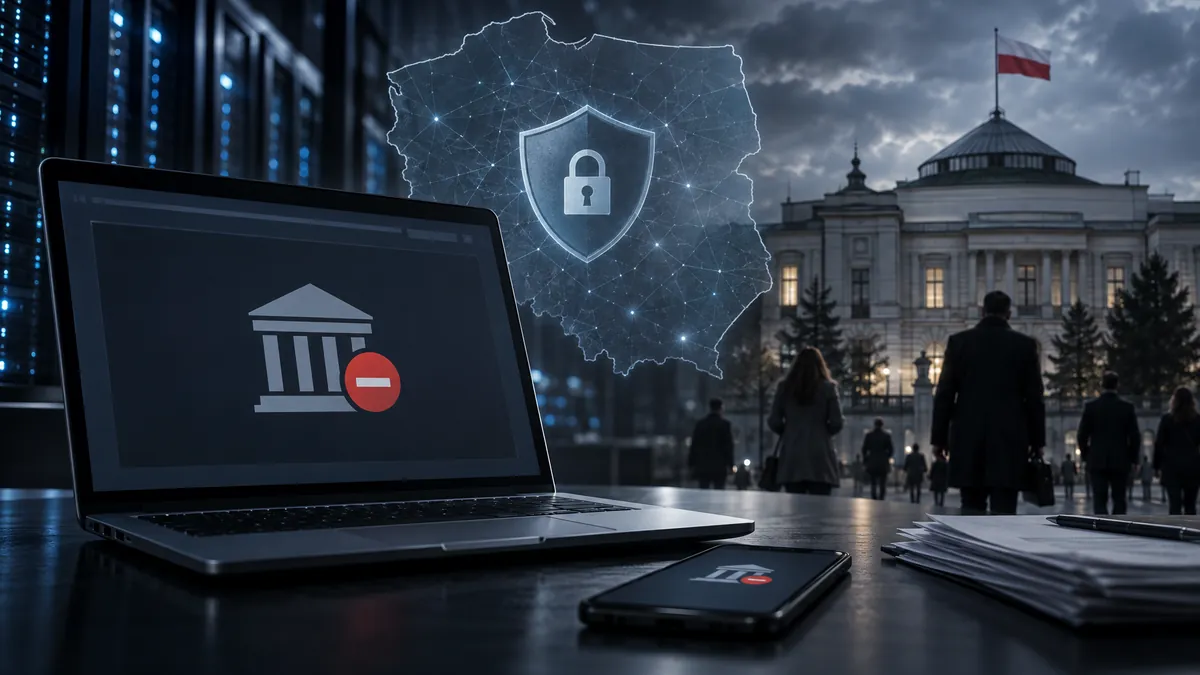
Citizens, businesses, and public institutions lost access to online government services after Poland temporarily shut down its ePUAP platform. Officials said security teams detected and stopped a cyberattack, then disabled the service as a precaution. The government said the infrastructure supporting key digital services remained secure. There is no public confirmation that attackers entered government systems or stole data, and no restoration timeline was provided.
What Happened
Poland temporarily disabled ePUAP, a nationwide platform used by citizens and businesses to interact with public agencies, after security teams detected and stopped a cyberattack. The platform supports the submission of official documents, communication with government bodies, and completion of administrative procedures online.
Digital Affairs Minister Krzysztof Gawkowski said the attack had been detected and stopped and that teams were working to restore full functionality. The Digital Affairs Ministry described the shutdown as a precaution rather than a response to confirmed damage. A ministry spokesperson said the system had not been shown to be compromised or disrupted by the attack itself and was disabled to allow security work to continue safely.
Officials also said the infrastructure of Poland’s Central Information Technology Center remained secure. That agency maintains key government digital services, including ePUAP. However, the government notice said ePUAP electronic mailboxes remained unavailable to both citizens and public institutions.
The interruption may also temporarily affect Trusted Profile, Poland’s digital identity service for accessing public services and electronically signing official documents. Authorities did not disclose the attack method, identify a suspected attacker, or provide a timetable for restoring the platform. They also did not publicly confirm unauthorized access, system compromise, or theft of sensitive information.
The available evidence therefore supports two conclusions at the same time: defenders appear to have stopped the attack, and the precautionary response still produced a meaningful service interruption. Claims about compromise, data loss, attribution, or the attacker’s objective would go beyond what officials have confirmed.
Why It Matters
ePUAP is not simply another public website. It is a service channel through which citizens, companies, and government institutions exchange official documents and complete administrative work. Taking it offline can delay those activities even when the underlying defensive response succeeds.
The possible effect on Trusted Profile adds an identity and trust dimension. If people cannot use a government-backed identity service or electronically sign documents, the operational consequences can extend beyond access to one portal. The evidence does not establish that Trusted Profile itself was compromised, only that its availability could be temporarily affected by the disruption.
For government leaders, the incident shows why cyber resilience includes continuity decisions, public communication, and safe restoration—not only blocking an attacker. A precautionary shutdown may reduce technical exposure, but it can also shift the immediate cost to citizens, businesses, and public agencies that depend on the service.
For security teams, the careful distinction between an attempted attack, a confirmed compromise, and a protective shutdown matters. Overstating the incident can damage trust, while understating the disruption can leave users without the information needed to plan around unavailable services.
What to Watch
The first issue to watch is restoration. Officials said services would resume after specialists completed their work, but they did not provide a timeline. Any later announcement should clarify which functions return first and whether Trusted Profile remains affected.
The second issue is technical confirmation. Authorities may eventually disclose the attack path, indicators found during the investigation, or whether attackers gained any unauthorized access before the response. Until then, compromise and data theft remain unconfirmed.
Attribution is also unresolved. No actor or motive has been publicly identified. Any future attribution should be evaluated against official findings rather than inferred from Poland’s broader exposure to repeated attacks.
Finally, defenders should watch whether the incident produces revised operating guidance for public institutions that depend on ePUAP electronic mailboxes or other connected government services.
What Defenders Should Do
Continuity: Service owners should confirm which essential procedures depend on ePUAP-like portals and document approved alternatives for periods when digital submission, identity, or signing functions are unavailable. Those alternatives should identify who can authorize a switch and how users will be informed.
Incident response: Security teams should preserve relevant logs and evidence, validate the integrity of connected systems, and define the checks required before access is restored. The goal is to avoid reopening a service before teams understand whether the attack reached authentication, administrative, or supporting infrastructure.
Identity: Teams responsible for digital identity should assess dependencies between the main service and identity or signing functions. If one platform is disabled, they should know which other services could become unavailable and how to communicate that limitation accurately.
Communications: Public statements should separate confirmed facts from unresolved questions. In this case, the supported facts are that an attack was detected and stopped, the portal was taken offline as a precaution, and no compromise or data theft had been publicly confirmed. Updates should clearly explain service availability without implying conclusions the investigation has not reached.
Recovery: Restoration plans should include technical validation, operational testing, and coordination with agencies that rely on the platform. Leaders should also define the point at which the operational cost of continued downtime must be reassessed against the remaining security uncertainty.
The Larger Lesson
A successful defensive action can still become an operational incident. Stopping an attack does not prevent disruption when the safest response is to disable a widely used platform.
That makes resilience a shared responsibility across security, service delivery, identity, communications, and executive leadership. Technical teams need authority to contain risk, while operational teams need workable alternatives for citizens and organizations that lose access.
The incident also shows why disciplined language matters during an investigation. A service shutdown is not proof of compromise, and the absence of confirmed compromise is not proof that the event had little impact. Mature response keeps both ideas in view: protect the system first, then restore trust and service through evidence-based decisions.