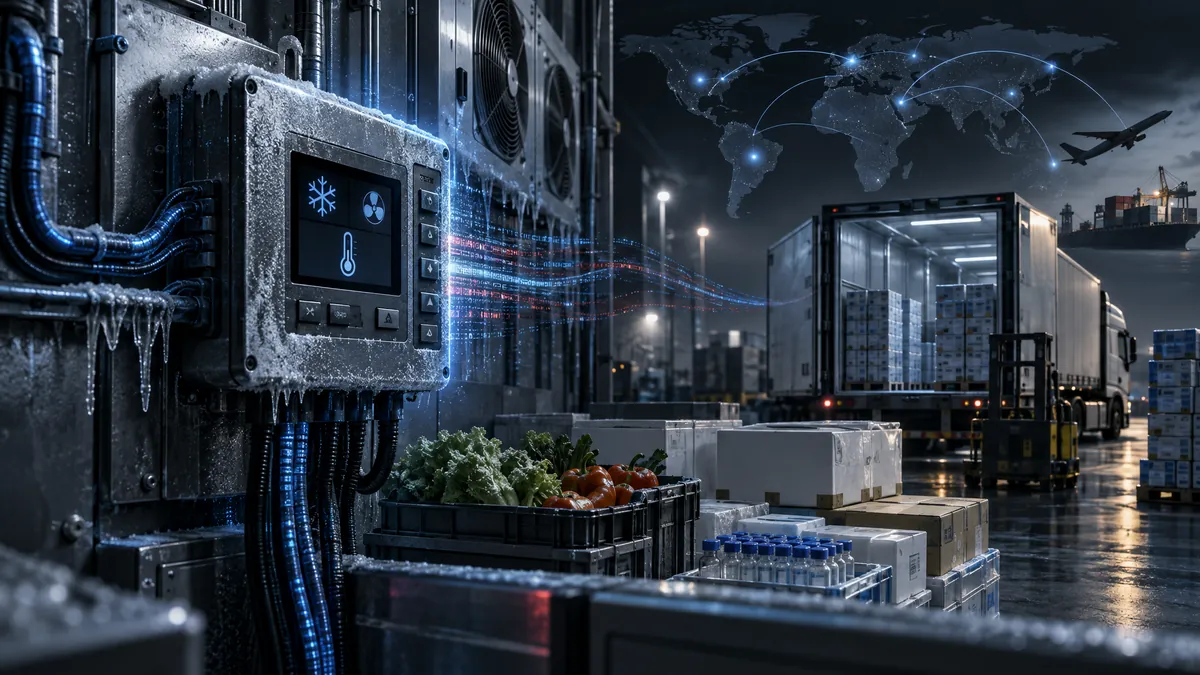
Food, medicine and equipment are at risk as malicious actors target industrial refrigeration and cold-chain monitoring systems worldwide. Attackers are going after unpatched or internet-accessible controllers used to manage temperatures and defrost cycles. They may bypass authentication, inject code or abuse weak configurations to force heating and continuous defrost. Successful attacks can also hide current temperatures from operators.
What Happened
U.S. government agencies have warned that malicious actors are targeting industrial refrigeration and cold-chain monitoring systems globally. The affected technology includes electronic temperature controllers and commercial refrigeration controllers used in retail grocery stores, cold-storage facilities and refrigerated transport. These systems automate temperature monitoring, continuous logging, defrost cycles and energy management, making them important to daily operations but potentially dangerous when exposed or misconfigured.
The reported attackers are looking for unpatched controllers, devices directly accessible from the internet and systems protected by weak configurations. The available attack paths include authentication bypass, arbitrary code injection and abuse of insecure settings. Once inside, an attacker may change temperature settings or force equipment into continuous heating or defrost cycles. Operators may also lose visibility into current temperatures, creating a denial-of-view condition that can delay recognition of unsafe storage or equipment behavior.
Recent incidents show how quickly those technical actions can become physical disruption. Reporting cited compromises at an estimated 250 to 350 French supermarkets in October. A later wave affected more than 115 stores across six European countries, with some systems shutting down and others reportedly reaching temperatures as high as 50°C (122°F). On November 3, the French Blood Establishment confirmed that an incident involving a refrigeration equipment provider had altered temperature and defrost settings at three facilities used to store blood products. The available evidence does not establish that all of these incidents were connected, and no actor has claimed responsibility for the recent European attacks.
Why It Matters
Refrigeration security is a business continuity, safety and supply-chain problem. Healthcare providers rely on controlled temperatures for blood products and other medical materials. Food producers, retailers and cold-storage operators depend on refrigeration to preserve inventory and protect consumers. Chemical facilities and transportation companies also use automated cooling and monitoring systems as part of normal operations.
A compromised controller can therefore create several forms of loss at once. Inventory may spoil, equipment may be damaged, service life may be shortened and continuous heating may create a fire hazard. If monitoring is also disrupted, staff may not know that a temperature has moved outside its safe range. Products could remain in circulation after unsafe storage unless organizations have reliable independent checks and response procedures.
The exposure also crosses organizational boundaries. Facilities teams may own the controller, an outside provider may maintain it, and security teams may have little visibility into its firmware, credentials or remote-access path. Executives should not assume that these devices appear in the same asset inventories or monitoring systems as conventional servers and laptops. The most important governance question is whether someone is clearly accountable for finding exposed controllers, approving remote access, applying updates and responding when operating limits change unexpectedly.
What to Watch
Responsibility for the recent attacks remains unconfirmed, and the relationship between individual incidents is unresolved. Operators should focus on observable behavior rather than wait for attribution. Unexpected setpoint changes, repeated activation of heating or defrost modes, unexplained controller restarts, loss of temperature visibility and unusual remote-access activity all warrant investigation.
Organizations should also watch for incidents at service providers that remotely manage refrigeration equipment. If a shared provider or monitoring platform is compromised, effects could appear across several facilities. Where controllers do not produce usable security logs, network traffic between the devices, management systems and remote-access services may provide the clearest evidence of abnormal activity.
The next decisions should be driven by exposure. Internet-accessible controllers and unsupported devices need priority. If remote access is operationally necessary, owners should verify who can use it, how authentication is enforced and whether activity is logged. Any unexplained movement outside approved temperature ranges should be treated as both a safety event and a possible cyber incident.
What Defenders Should Do
Begin with an inventory of refrigeration controllers, monitoring systems and the remote services that reach them. Identify every device accessible from the public internet and eliminate that exposure wherever possible. If remote access is necessary, place it behind a current firewall or edge device, restrict the approved source addresses and require strong authentication. Default passwords should be changed, password policies strengthened and phishing-resistant multifactor authentication used wherever the technology supports it.
Separate operational technology from business networks through a dedicated network segment. Access should be limited to authorized devices and IP addresses, reducing the paths an attacker can use to reach controllers or move elsewhere. Firmware should be kept current, and the organization should have a lifecycle process for retiring unsupported equipment that can no longer receive security updates.
Operational safeguards matter as much as access controls. Define reasonable temperature and setpoint limits on downstream devices so a compromised controller cannot move equipment freely into unsafe ranges. Alert when those limits are approached or exceeded. Maintain current offline and offsite backups for relevant configurations, and test that they can be restored.
Enable and review controller logs where available. Where logging is limited or non-standard, capture network communications around the devices and management systems. Incident procedures should connect facilities, safety, IT and security teams so unexplained temperature changes are investigated quickly. Organizations should preserve the date, time, location, affected equipment, observed behavior and scope when reporting suspicious activity to the appropriate authorities.
The Larger Lesson
Cyber risk does not stop at data. A small controller with weak credentials or unnecessary internet access can affect food safety, medical supplies, equipment life and physical facilities. These devices often remain outside normal security programs because they look like operational equipment rather than computers.
The durable lesson is to manage connected controls according to their real-world consequences. Asset ownership, secure remote access, network separation, updates, monitoring and safe operating limits all need to work together. Preventing access is important, but resilient operations also require controls that limit physical damage when prevention fails.